 how-to
Why Hiring a Local Custom Jewelry Designer Pays Off
Last Updated: November 4, 2026
Quick Summary
A local custom jewelry designer works with you one-on-one to turn your ideas into a finished piece that reflects your story rather than a catalog template. Local designers also let you check stone color, setting height and band fit in person before anything is set.
- Custom projects follow seven steps, from consultation through final polish and fit check.
- Ask for deposit terms, revision limits and design ownership in writing before paying anything.
- Confirm final specifications such as stone measurements, metal type, ring size and finish in the agreement.
- Some band styles, especially those with stones set around the shank, cannot be resized easily or at all.
- Bring reference photos, ring size and a budget range to the first meeting to keep the project on schedule.
Table of Contents
- What a Local Custom Jewelry Designer Actually Does for You
- The Custom Engagement Ring Design Process, Step by Step
- Questions to Ask a Custom Jewelry Designer Before You Commit
- How Long a Custom Engagement Ring Takes From Sketch to Delivery
- What Custom Jewelry Design Cost Depends On
- Local Designer Versus Online Ordering: Where the Difference Shows
- Booking Your First Design Consultation
- Frequently Asked Questions
Choosing someone to design a piece of jewelry is a bigger decision than buying one off a shelf. A local custom jewelry designer works with you one-on-one, so the ring you end up with reflects your story rather than a catalog template. For couples planning an engagement, that personal attention is often a major reason to choose a local designer over ordering online.
At Sherwood Bridge Diamonds, we walk every client through the process from first sketch to final setting. Below, we cover what a local designer actually does, what to ask before committing, how long the work takes, and what affects the cost.
What a Local Custom Jewelry Designer Actually Does for You
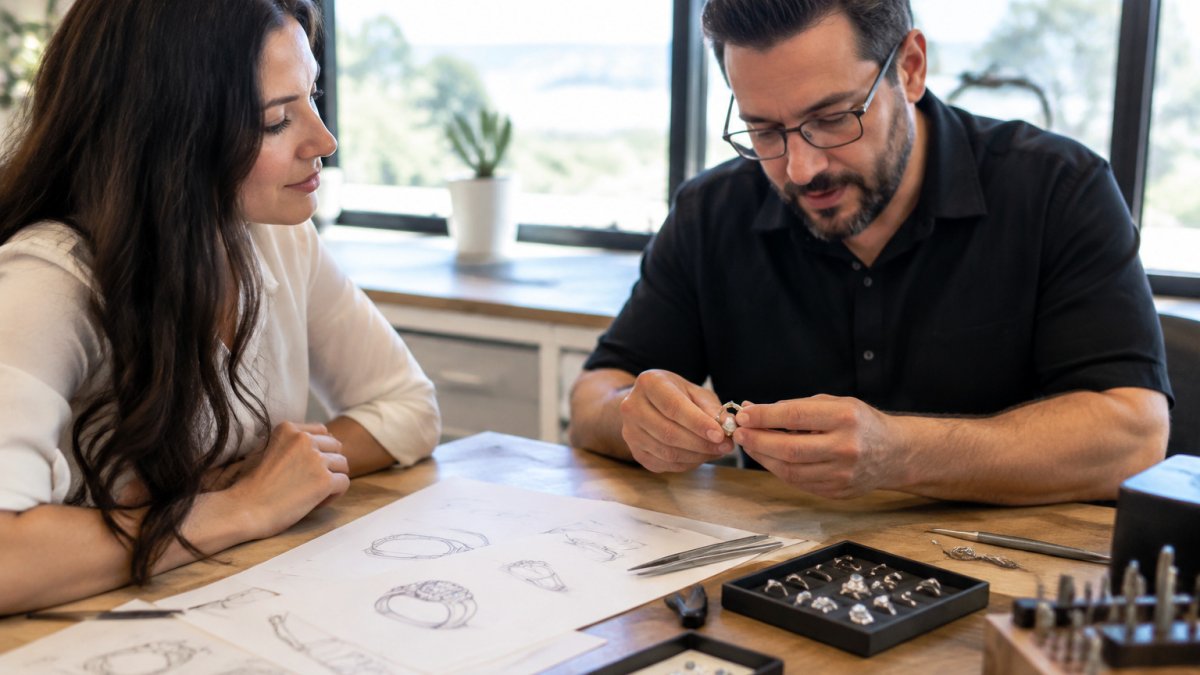
A custom jewelry designer turns your ideas into a finished piece. That usually starts with a consultation where you talk through the style, the stone, the metal, and how the ring will be worn day to day.
A local designer can also meet you in person to check details that are hard to judge on a screen. Stone color, setting height, and how a band fits next to an existing ring all look different in the hand.
Common things a designer handles for you:
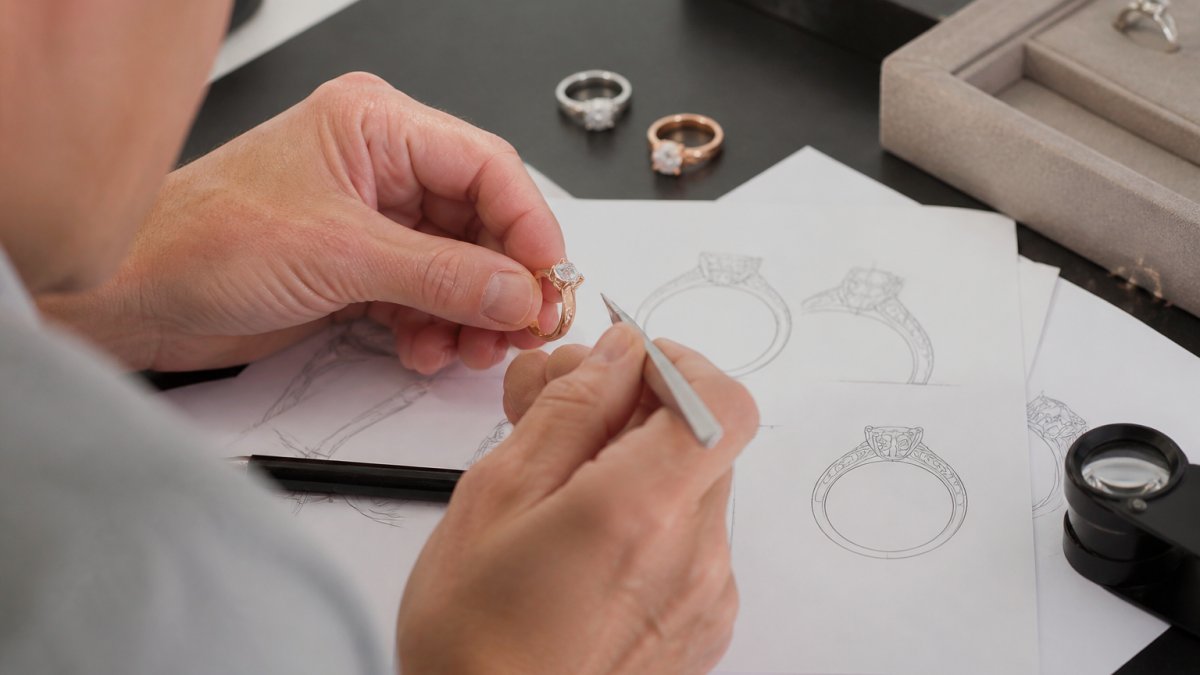
- Sketching and refining the design with you
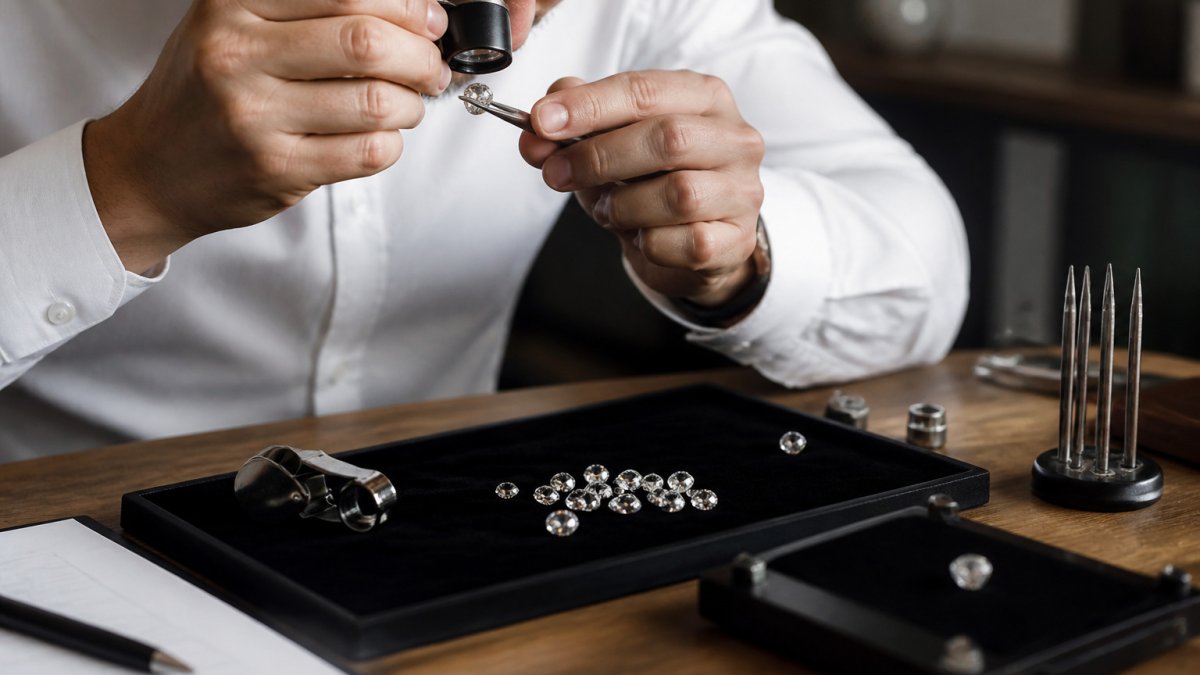
- Selecting stones and precious metals
- Handling the setting, polishing, and final fit
- Advising on care and future repairs
The Custom Engagement Ring Design Process, Step by Step
Most custom projects follow a similar path. Knowing the steps helps you plan your time and ask the right questions at each stage. You can read the full custom engagement ring design process guide for more detail on each step.
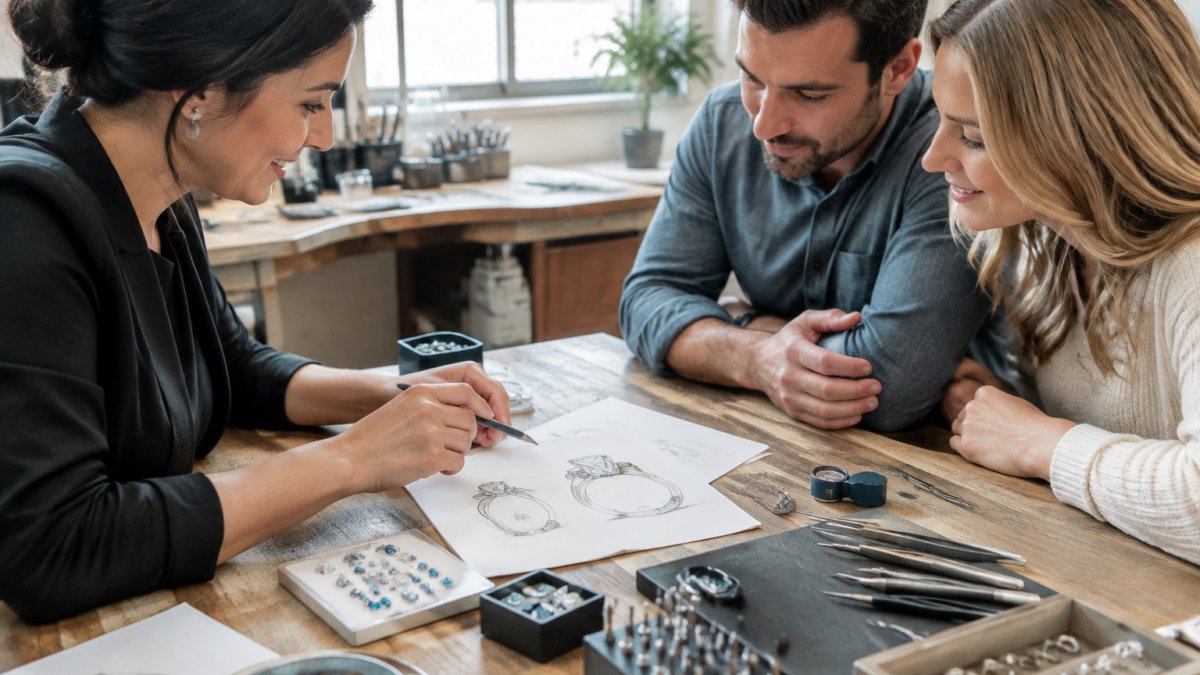
- Consultation. You share your vision, budget range, and lifestyle needs.
- Sketch and concept. The designer proposes one or more drawings or digital renderings.
- Stone and metal selection. You choose the center stone, any accent stones, and the metal.
- Wax or digital model. The design is shaped into a model for review before casting.
- Approval. You confirm the final design before any stone is set.
- Crafting and setting. The piece is cast, shaped, and set.
- Final polish and fit check. You try the ring on before pickup or delivery.
Ask at each step what you will see, when you will see it, and what changes are still possible.
Most custom projects follow the same seven steps, so you can plan your time and know what to expect at each stage.
| Step | What to do | Timing |
|---|---|---|
| Consultation | Share your vision, budget range and lifestyle needs | First meeting |
| Sketch and concept | Review one or more drawings or digital renderings | After consultation |
| Stone and metal selection | Choose center stone, accent stones and metal | Varies by sourcing |
| Wax or digital model | Review the model before casting | Before casting |
| Approval | Confirm the final design before any stone is set | Before setting |
| Crafting and setting | Piece is cast, shaped and set | After approval |
| Final polish and fit check | Try the ring on before pickup or delivery | Before pickup |
Questions to Ask a Custom Jewelry Designer Before You Commit
Asking the right questions up front protects you from surprises later. Good designers welcome these questions, and the quality of the answers, not just the answers themselves, tells you a lot about how the project will go.
Experience and craftsmanship
- How long have you been designing custom pieces, and how many projects like mine have you completed?
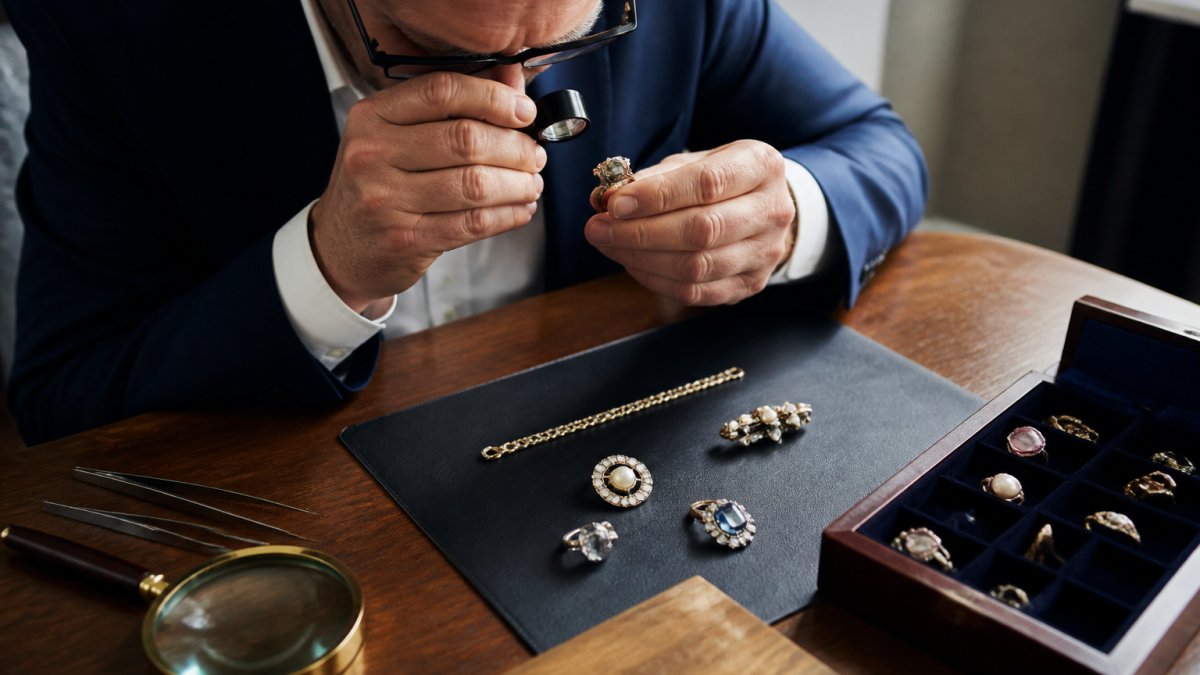
- Can I see a portfolio of finished custom work, including close-up photos of settings and finishes? Our guide on how to verify custom jewelry design explains what to look for in that portfolio.
- Do you do the bench work in-house, or is it sent to an outside caster or setter? If it is sent out, who does it and how is quality checked?
- What certifications or trade memberships do you hold, and can I verify them?
Stones, metals, and sourcing
- Where do your stones and metals come from, and can you document provenance for the center stone?
- Are stones natural, lab-grown, or treated, and how is that disclosed in writing?
- Do you follow any ethical sourcing standards, and can you show documentation for the specific stone I am buying? If you are weighing these questions, see how to choose an ethical diamond engagement ring.
Design process and revisions
- How many design concepts will I see before the final version, and how many revision rounds are included?
- At what stage am I locked in, and what changes are still possible after I approve the CAD or wax model?
- Will I see the actual stone before it is set, and can I approve the setting height and band profile in person?
Money, contracts, and ownership
- What is included in the quoted price, and what could add cost, resizing, engraving, rush fees, or stone upgrades?
- How are deposits handled, what payment milestones apply, and is any part of the deposit refundable?
- What are the cancellation terms if I change my mind at the sketch, model, or setting stage?
- Who owns the design, sketches, and CAD files once the piece is finished, and can I get copies?
- What warranty covers workmanship, and what is excluded, for example, damage from wear or work by another jeweler?
Aftercare and service
- Do you handle resizing, re-tipping, and re-polishing for pieces you made, and what do those services cost after the sale?
- What is the turnaround if a stone loosens or a prong needs repair?
Watch out: a designer who will not put deposit terms, revision limits, and design ownership in writing is a warning sign, no matter how good the sketches look. Ask for the agreement before you pay anything, and confirm that the final specifications, stone measurements, metal type and weight, ring size, and finish, are listed in it.
How Long a Custom Engagement Ring Takes From Sketch to Delivery
Custom work takes longer than buying a ready-made ring, and the timeline depends on how many revisions you request, how complex the setting is, and how quickly you make decisions at each stage. Timelines vary by project, so ask for a written schedule during your consultation.
A realistic sequence usually looks like this:
- Consultation and concept. You meet, share references, and the designer prepares initial sketches or digital renderings. This stage moves fastest when you bring clear inspiration photos and a firm budget range.
- Design refinement. You review concepts and request changes. Each revision round adds time, so ask up front how many rounds are included and how long each one takes.
- Stone and metal selection. Choosing the center stone can take days or weeks depending on whether it is in stock, needs to be sourced, or must be cut to order. Seeing stones in person usually shortens this stage because you decide faster.
- CAD or wax model review. The design is built into a model for your approval. This is the last practical point for structural changes; after approval, changes usually mean starting over.
- Casting, setting, and finishing. Once approved, the piece is cast, the stones are set, and the ring is polished. Complex settings and multiple accent stones take longer than a simple solitaire.
- Final fit check and pickup. You try the ring on, confirm the fit, and arrange any resizing.
Revisions and resizing add time. A resize after delivery is usually a separate step, and some band styles, especially those with stones set around the shank, cannot be resized easily or at all. Ask about resizing limits before you choose a design, not after.
Deadline-sensitive orders. If you have a proposal date, a holiday, or an anniversary in mind, tell the designer at the first consultation and ask for a written timeline with milestone dates. Rush work is sometimes possible, but it usually carries an added fee and may limit the number of revisions available to you.
How to keep the project on schedule
- Bring reference photos, ring size, and budget range to the first meeting.
- Decide on the center stone early, since sourcing is often the longest variable.
- Respond to design approvals promptly; delays on your side push every later stage.
- Confirm in writing the date you will see the model, the date you must approve it, and the expected delivery date.
Watch out: a verbal promise of a delivery date is not a schedule. Ask for the milestone dates in the agreement, and confirm what happens, refund, credit, or revised timeline, if a deadline is missed.
What Custom Jewelry Design Cost Depends On
Custom pricing varies widely, so we do not list specific prices here. The total depends on several factors, including:
- The center stone's size, cut, color, and clarity
- Whether the stone is natural or lab-grown
- The metal type and weight
- Setting complexity and the number of accent stones
- The number of revisions before approval
Ask for a written quote that breaks down these components. For current pricing or a personalized estimate, contact Sherwood Bridge Diamonds directly.
Local Designer Versus Online Ordering: Where the Difference Shows
Ordering online can work for simple, standard designs. A local designer makes more sense when the piece needs fitting, when you want to see stones in person, or when you want someone to answer questions in real time.
Booking Your First Design Consultation
The first step is simply reaching out. A consultation lets you describe what you want, see examples of past work, and learn how the process would run for your project. If you are still looking for a designer near you, this guide to finding custom ring designers in Orange County walks through the steps.
Come prepared with photos of styles you like, a rough budget range, and any family pieces you want to incorporate. You can book your appointment with Sherwood Bridge Diamonds to start planning your custom piece.
Frequently Asked Questions
How do I know a custom jewelry designer will listen to my vision?
Look for a designer who starts with a consultation before any sketching begins. Ask to see a portfolio of past custom pieces and request references from recent clients. Written design notes that record your preferences for stone, metal and setting give you a reference point if the final piece drifts from what you asked for.
Are lab-grown diamonds worth the same as natural diamonds?
Lab-grown and natural diamonds are chemically identical, but resale values can differ. Ask any designer for a written appraisal that states the stone type, carat weight, cut, color and clarity, since that document is what an insurer will need. Pricing varies by stone and setting, so request a quote for your specific design.
What should I do if I don't like the design?
Ask before you sign anything what happens if the design concept does not work for you. Clarify how many revisions are included, when deposits are refundable and at what stage the design becomes final. A written agreement should spell out these terms. Requesting revisions at the sketch stage costs far less time and money than changes after casting or stone setting.
What credentials matter for an insurance appraisal?
Insurers generally want an appraisal from a qualified gemologist or a credentialed appraiser who can document the stone's grading and the methodology used. Ask whether the appraiser holds recognized gemological credentials and whether the appraisal can be used for insurance replacement. Keep the original appraisal with your policy records and update it periodically, since replacement values change over time.