 how-to
Custom Engagement Ring Design Process: A Step-by-Step Guide
Table of Contents
- Step 1: The Custom Engagement Ring Consultation
- Step 2: Gathering Custom Engagement Ring Design Ideas
- Step 3: Selecting Your Center Stone and Setting
- Step 4: Custom Engagement Ring CAD Design and Visualization
- Step 5: Design Approval, Revisions, and Cancellation Terms
- Step 6: Craftsmanship, Quality Control, and Final Delivery
- Step 7: Understanding Your Custom Engagement Ring Timeline
- Budgeting for Your Custom Engagement Ring
- Frequently Asked Questions
Last Updated: October 18, 2026
Step 1: The Custom Engagement Ring Consultation
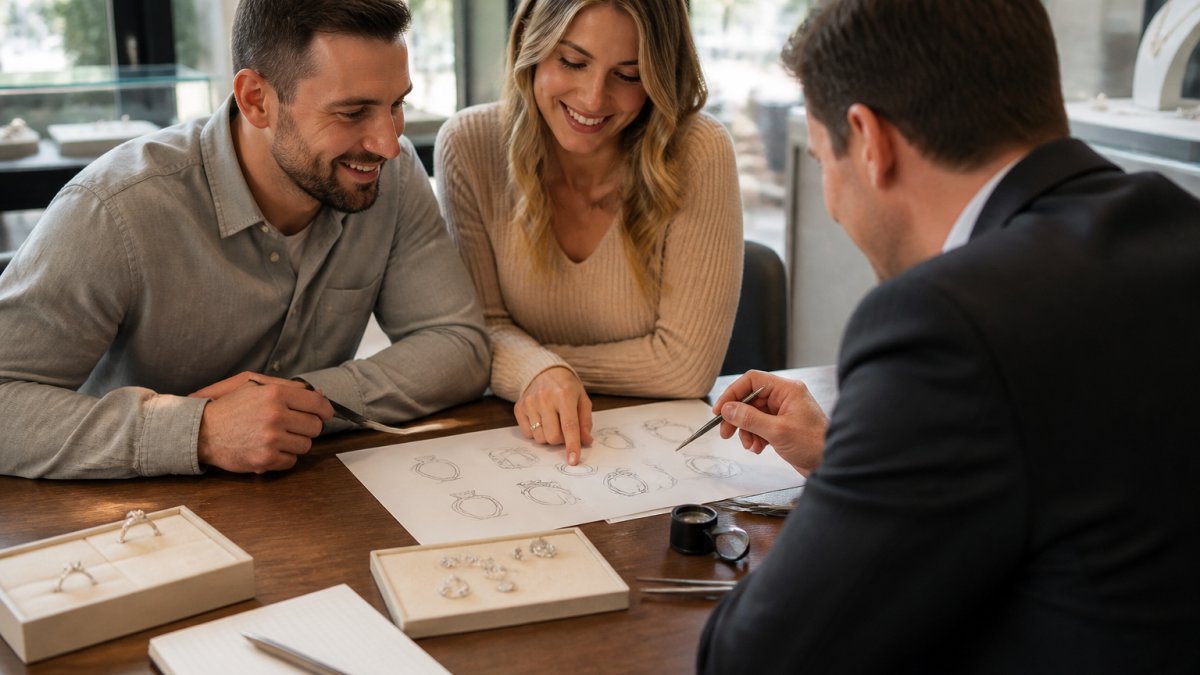
The custom engagement ring design process starts with a conversation, not a sketch. At Sherwood Bridge Diamonds, we treat that first meeting as the foundation for everything that follows. You talk, we listen, and the ring takes shape from there.
What most guides miss is how much the consultation shapes the final result. Bring your ideas, your questions, and your deal-breakers.
What to Bring to Your Consultation
- Inspiration photos from social media, magazines, or family rings
- Your budget range, stated plainly
- Ring size estimates for the wearer
- Any heirloom stones you want reset
- A sense of the wearer's daily habits and style
Questions to Ask Your Jeweler
Ask how long they have designed rings, whether they handle design and production in-house, and what happens if you dislike the finished piece.
Step 2: Gathering Custom Engagement Ring Design Ideas
Custom engagement ring design ideas rarely arrive fully formed. They build from images, memories, and the wearer's personal style. Collect more than you think you need, then look for patterns.
Pull inspiration from three places: what the wearer already wears, what they admire on others, and what feels timeless to them. A common mistake is chasing trends that will look dated in a decade.
Narrow your ideas to two or three directions before your next appointment. This keeps the design conversation focused. The Gemological Institute of America's diamond education resources explain how cut, color, clarity, and carat interact, which helps you spot what you actually love in each photo.
Step 3: Selecting Your Center Stone and Setting
Stone selection decides more of the final look than any other choice. The center stone drives the design, and the setting frames it. Get this step right and the rest falls into place.
Natural vs. Lab-Grown Diamonds
Lab-grown diamonds match natural diamonds in chemical and physical structure, and federal rules require them to be disclosed as lab-grown. Many couples choose lab-grown for the value, since you can often afford a larger or higher-quality stone for the same budget. Natural stones carry a different resale story. We walk clients through both honestly, with grading reports in hand.
Metal and Setting Choices
- Gold: Classic, warm, and easy to repair. Choose yellow, white, or rose.
- Platinum: Denser and more durable, ideal for daily wear.
- Prong settings: Maximum light to the stone, minimal metal.
- Bezel settings: Protective rim, good for active lifestyles.
Ask how each metal wears over time. White gold needs periodic replating; platinum develops a patina some people love and others polish away.
Step 4: Custom Engagement Ring CAD Design and Visualization
CAD design turns your ideas into a model you can see. Your jeweler builds the ring in computer-aided design software, then renders it from every angle. You review images before anything is cast in metal. This is the step where vague ideas become specific, and where most of the design decisions that affect comfort and durability get locked in.
What the CAD Review Actually Shows You
A typical CAD package includes orthographic views (top, side, front), a perspective render, and often a short animation. Look at four things in every view:
- Band width and thickness at the bottom of the shank. A band under about 1.8 mm at the base is prone to bending.
- Stone height above the finger. A high-set center stone catches on clothing and gloves. Ask for the measurement from the finger to the top of the stone and compare it to rings the wearer already owns.
- Prong count and tip style. Four prongs show more of the stone; six prongs hold it more securely. Rounded tips snag less than pointed ones.
- How the ring sits against an adjacent band. If a wedding band will be worn alongside, ask for a render with both rings together so the profiles do not collide.
Sketch, Render, Wax, or Resin Model
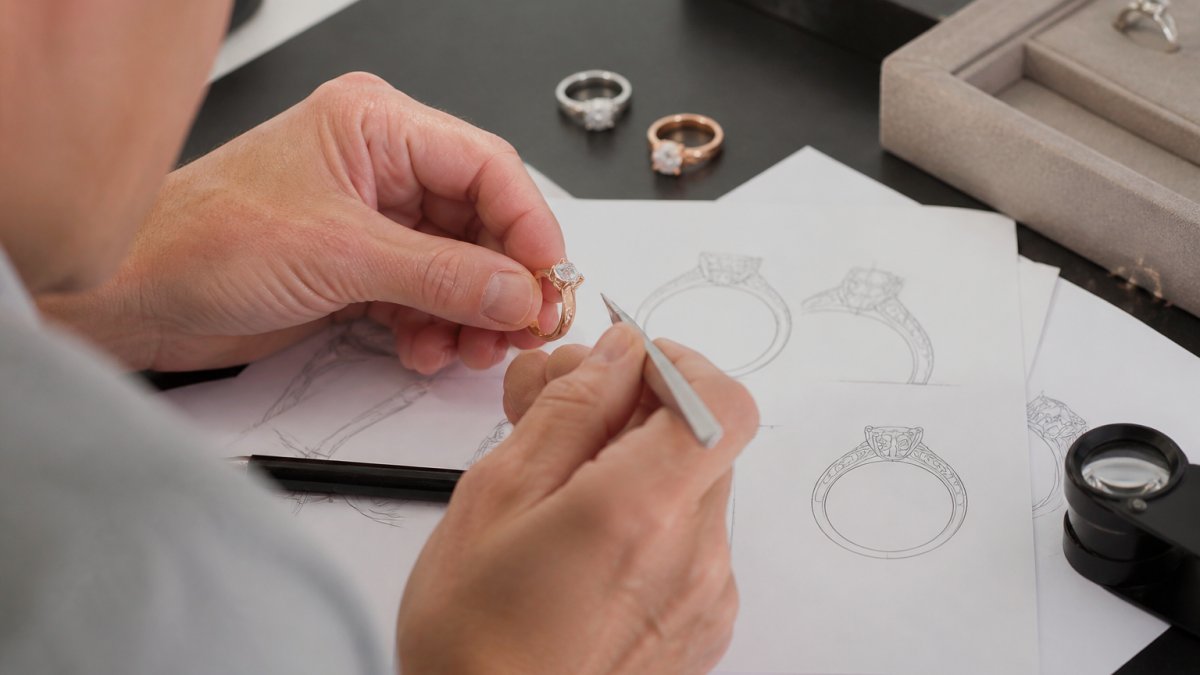
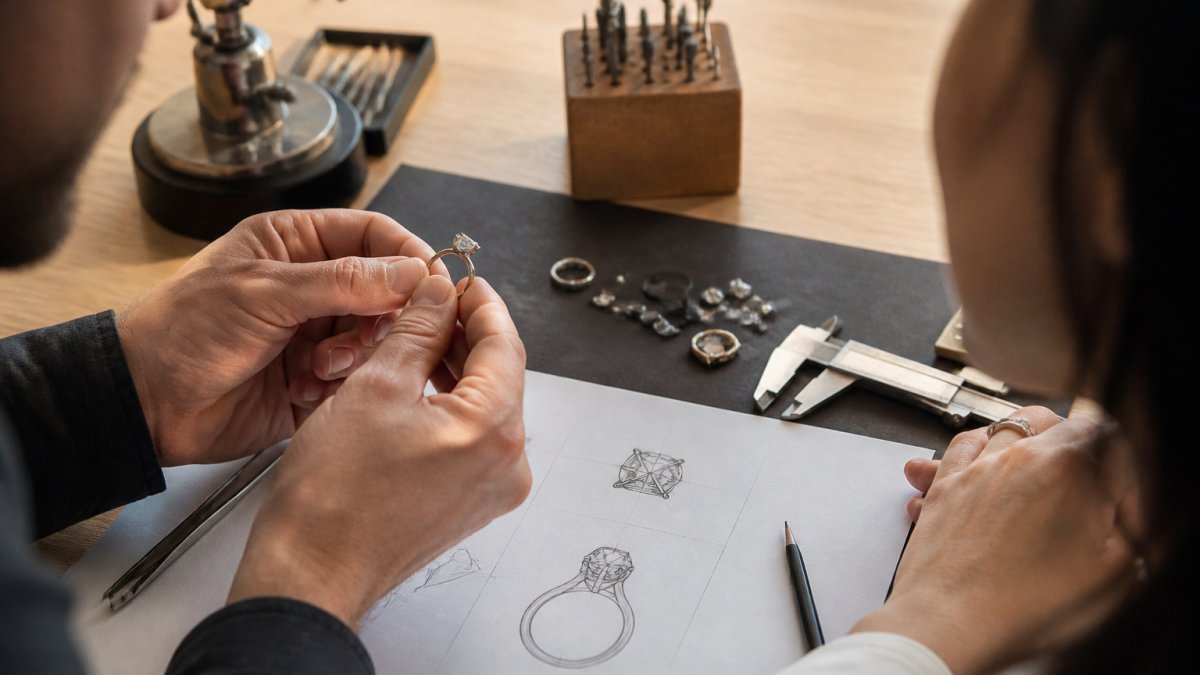
Most shops move through a sequence: hand sketch, CAD render, then a physical model. The physical model, wax or resin, printed from the CAD file, is an important step. Holding the model lets you feel the weight, check the height against your knuckle, and spot proportions that look fine on a screen but wrong on a hand. Ask whether the model is included in the quoted price or billed separately; policies vary.
How Revisions Work at This Stage
CAD changes are often more flexible than metal changes. A common pattern is two to three revision rounds included before casting, with additional rounds billed hourly. Ask specifically:
- How many revision rounds are included in the quote?
- What is the hourly rate for changes beyond that?
- Does a change to the center stone size trigger a full redesign?
What CAD Cannot Tell You
Renders show shape, not sparkle. Lighting in CAD images is idealized, so a stone that looks brilliant on screen may look different under office lighting. Ask to see loose stones in person or in video under neutral light before approving. Also ask whether the CAD file accounts for the exact stone you selected, a setting drawn for a 1.00 ct stone will not fit a 1.15 ct stone without adjustment.
Step 5: Design Approval, Revisions, and Cancellation Terms
Design approval is your checkpoint, and you should never feel rushed through it. Ask in writing how many revision rounds are included and what triggers extra charges. Get the cancellation policy before you pay a deposit.
Many custom orders involve a deposit that covers materials and CAD time. Policies vary widely, so read the fine print. If a shop will not put terms in writing, treat that as a warning sign.
Confirm three things before signing: revision limits, deposit refund rules, and who owns the CAD files if the order stops.
Step 6: Craftsmanship, Quality Control, and Final Delivery
Craftsmanship is where the design becomes a real object. The jeweler casts the metal, sets the stones, and polishes the finished ring. Each stage needs inspection.
Final inspection should cover stone security, prong alignment, and finish quality. Ask for the grading report and appraisal paperwork at pickup. The Federal Trade Commission's jewelry guides explain the disclosure rules sellers must follow, which helps you confirm what you are buying.
Step 7: Understanding Your Custom Engagement Ring Timeline
A custom engagement ring timeline usually runs several weeks from approved design to delivery. Complex designs, special stone orders, and engraving add time. Plan backward from your proposal date and build in a buffer.
Three months is a comfortable window for most projects. Tighter timelines are possible when stones are in stock and the design is simple. Tell your jeweler your deadline at the consultation, not later.
Budgeting for Your Custom Engagement Ring
Budget drives every decision in the custom engagement ring design process, so name it early. Most guides skip this conversation, which is why buyers are surprised at the end. Pricing depends on the stone, metal, setting complexity, and personalization, and two rings that look identical can cost very different amounts depending on those inputs.
Where the Money Actually Goes
The center stone is often the largest single line item, frequently accounting for half or more of the total on a natural-diamond ring and a smaller share on a lab-grown ring. The setting and labor make up most of the rest.
| Cost Driver | What Affects It | How to Control It |
|---|---|---|
| Center stone | Carat, cut, color, clarity, natural vs. lab-grown | Choose lab-grown or a slightly lower clarity grade |
| Metal | Gold vs. platinum, weight, market price | Pick a thinner band or gold |
| Setting style | Prong vs. bezel, side stones, complexity | Skip side stones or halos |
| Personalization | Engraving, custom milgrain, mixed metals | Limit to one custom detail |
| Timeline | Rush orders, special stone sourcing | Plan ahead |
Realistic Ranges to Anchor Your Budget
Exact quotes vary by jeweler and market, but buyers should walk in with ranges in mind. As a planning framework:
- Lab-grown center stone: often offers significant value compared to natural diamonds for the same carat and grade.
- Natural center stone: price climbs with carat.
- Setting and labor: a simple solitaire setting is generally less expensive; halos, side stones, and hand-engraving each add cost and time.
- Metal: platinum typically costs more than gold per gram and is denser, so a platinum ring uses more metal by weight. White gold needs periodic rhodium replating, which is a recurring cost (White Metal Options for Your Engagement Ring).
A Prioritization Framework
When the budget is fixed, spend in this order:
- Cut quality first. Cut drives sparkle more than size or color does. A well-cut smaller stone outperforms a poorly cut larger one.
- Size second, within reason. Buy just under a price jump (for example, just under a full carat) to get more stone for the money.
- Color and clarity third. Most buyers cannot see the difference between adjacent grades once the stone is set, especially in a well-cut stone.
- Setting complexity last. Side stones and halos add cost and maintenance; a clean solitaire ages better and is easier to insure and repair.
Questions to Ask Before You Commit
- Is the quote all-in, or are CAD, model, setting, and appraisal billed separately?
- What deposit is required, and what portion is refundable if you cancel?
- Does the price include sizing, and what does a resize cost later?
- Is the ring appraised for insurance, and who pays for the appraisal?
Frequently Asked Questions
What are the steps in the custom engagement ring design process?
The process typically follows seven steps: consultation, gathering design ideas, selecting your center stone and setting, CAD design and visualization, design approval and revisions, craftsmanship and quality control, and final delivery. Each step includes checkpoints where you review and confirm details before moving forward. A good jeweler guides you through every stage, explains your options, and ensures the finished ring matches your vision and budget.
How long does it take to design and make a custom engagement ring?
Most custom rings take several weeks from consultation to delivery, depending on the complexity of the design, stone sourcing, and the jeweler's production schedule. Simple designs may move faster, while intricate settings or rare stones can add time. If you have a proposal date in mind, share it during the consultation so your jeweler can confirm whether the custom engagement ring timeline is realistic or suggest adjustments.
Can I see a design or model before the ring is made?
Yes. Most jewelers provide custom engagement ring CAD design renderings or a physical model for your review before production begins. You can request changes to the proportions, stone placement, or metal details at this stage. Ask what revision policy applies and get approval terms in writing so you know exactly what happens if the design needs adjustment or if you decide to cancel.
What should I bring to a custom engagement ring design consultation?
Bring inspiration photos, notes on your partner's style, ring size if known, and a clear budget range. If you have a family stone or heirloom to incorporate, bring it along. Also prepare questions about sourcing, grading reports, warranties, and the custom engagement ring timeline. Being specific about your preferences helps your jeweler translate your ideas into a design that feels personal and wearable.
Choosing a custom ring means trusting someone with a piece you will wear for decades. At Sherwood Bridge Diamonds, we have spent over 15 years guiding couples through every step, from the first consultation to the final polish. Our hands-on design experience, ethically sourced lab-grown diamonds, and in-house appraisal services keep the whole process under one roof. Make an appointment and let's design a ring that tells your story.