 ultimate-guide
7 Lab Grown Diamond Resale Facts for 2026
Quick Summary
Lab grown diamonds resale value is typically far below purchase price, with published estimates of roughly 20% to 40% recovery, though the actual offer depends on the stone's specifications, the buyer, and the channel used. Wholesale prices have fallen sharply, so resale figures are best treated as ranges rather than guarantees.
- Compare offers on the same basis, using the stone's specifications and report number.
- Lab grown stones generally resell for less than natural diamonds of similar specifications.
- Net proceeds after commissions, shipping, insurance and setting removal matter more than gross offers.
- Get a current appraisal and written offers from at least two channels before selling.
Table of Contents
- What Lab Grown Diamonds Typically Resell For in 2026
- Why Lab Grown Diamond Resale Prices Are Low
- Lab Grown vs Natural Diamond Resale Value
- Lab Grown Diamond Depreciation Rate and Price Trends
- Selling Lab Grown Diamonds to Jewelers: Options and Net Proceeds
- Resale, Trade-In, Buyback and Appraisal: Know the Difference
- Buying a Lab Grown Diamond Ring With Resale in Mind
- Frequently Asked Questions
7 Lab Grown Diamond Resale Facts for 2026
Last Updated: November 2, 2026
What Lab Grown Diamonds Typically Resell For in 2026
Published estimates for lab grown diamond resale value vary widely, and the figures a seller actually receives depend on the stone, the buyer, and the channel used. Treat any published percentage as a starting point rather than a guarantee.
Recent market analyses describe a similar pattern. 2026 lab-grown diamond statistics compilation puts lab-grown recovery at roughly 20% to 40% of purchase price, compared with 50% to 60% for natural diamonds. Treat these as ranges, not promises.
Why Retailer Resale Estimates Vary
Retailer estimates differ because they measure different things. Some describe the cash a jeweler might offer, others describe the share of purchase price recovered in a private sale, and few publish the sample behind the number. Two retailers can both be accurate and still disagree by 10 percentage points.
When you compare figures, check what the source is actually measuring and whether it reflects a stone with your specifications.
How Specifications Move the Resale Number
A single percentage range hides much of what determines an offer. The following factors generally influence where a lab grown stone falls within the resale range. They are directional patterns, not guarantees, and are best used to sanity-check an offer rather than as a price list.
- Carat weight. Mid-size stones are generally considered to have the widest buyer pool, since they suit both engagement rings and studs.
- Shape. Round brilliants are generally regarded as the most liquid shape, while fancy shapes can resell more slowly.
- Color and clarity. Grades that were once premium have become more common in lab grown stones, which can reduce the premium they command.
- Cut quality. Cut quality can be a meaningful differentiator when reselling a stone.
- Report status. A current grading report from a recognized laboratory, with the report number matching the stone, generally supports a stone's value. An uncertified stone or one with a mismatched or outdated report may receive lower offers.
- Setting and metal. A setting may be valued separately from the stone, and removing a stone from a setting can add time and risk to a sale.
Watch out: a jeweler's verbal estimate is not an offer. Ask for the number in writing, with the stone's specifications and the report number noted, so you can compare it against other bids on the same basis.
A Dated Reference Range, Not a Quote
Because wholesale lab grown prices have moved quickly, any percentage table goes stale within months. The practical approach is to anchor on the most recent wholesale price for your specifications and then apply the channel discount. JCK's report on lab-grown wholesale price declines publishes quarterly wholesale benchmarks that sellers can use as a starting point. If a 3-carat VVS D round wholesaled for $126 per carat in Q1 2026, a stone of that description has a wholesale reference of roughly $378, and a jeweler offer in the 10%-30% range of original retail is consistent with a retail price several times that wholesale figure. Use the benchmark to check whether an offer is in the right neighborhood, not to set a target price.
Why Lab Grown Diamond Resale Prices Are Low
Wholesale prices have fallen sharply. JCK's report on lab-grown wholesale price declines describes a 3-carat VVS D round selling for $126 per carat in Q1 2026, a 30% drop from the prior year. Mavilo reports stones that retailed for $5,000 in 2020 now wholesaling for $300.
Production has scaled quickly, and supply now outpaces demand for many sizes. When a new stone can be grown and sold cheaply, the market value of an existing stone falls with it. That is the core reason resale values look weak next to what buyers originally paid.
Lab Grown vs Natural Diamond Resale Value
Lab-grown stones generally resell for less than natural diamonds of similar specifications, and the gap is widening. StoneAlgo reports that lab-grown prices fell 30.65% over the past year, against a 14.25% decline for natural diamonds. Fortune Business Insights lab-grown diamond market forecast projects the global market growing from $33.54 billion in 2026 to $91.85 billion by 2034, which signals strong demand even as individual resale values drop.
Growing market size does not mean rising lab grown diamonds resale value. Volume and value can grow together while each stone loses worth.
Lab Grown Diamond Depreciation Rate and Price Trends
Depreciation tends to be steepest right after purchase and can continue as wholesale prices decline.
Selling Lab Grown Diamonds to Jewelers: Options and Net Proceeds
Owners can sell through a local jeweler, a consignment arrangement, or an online buyer. Each path has different fees and timelines.
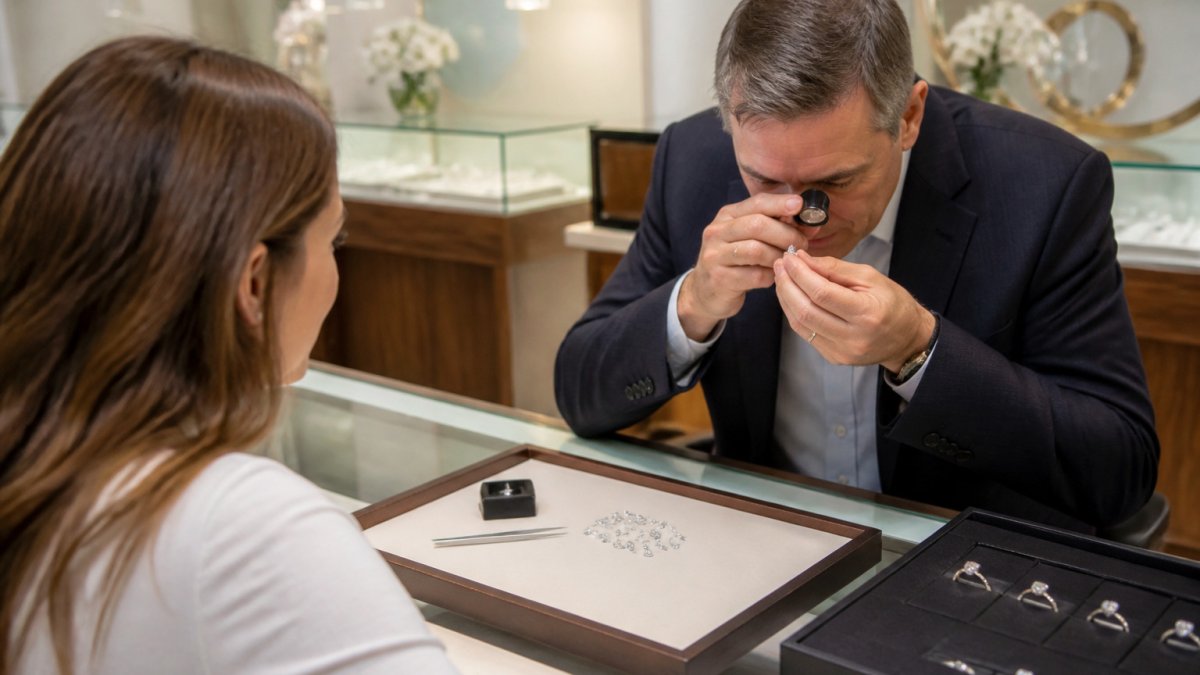
Net proceeds are what matter. Subtract commissions, shipping, insurance, and any testing fees before comparing offers. Getting a current appraisal first can help you understand the stone's specifications before you negotiate. Estate Jewelry Appraisal: A Step-by-Step Guide walks through the appraisal process from start to finish.
A Channel-by-Channel Comparison
The table below summarizes how the main routes differ. Percentages are typical ranges reported by dealers and marketplaces, not fixed rates, and every channel should confirm its terms in writing before you ship a stone.
- Local jeweler (direct cash purchase). A direct cash sale can be fast. The offer typically reflects the dealer's margin. Best for sellers who prioritize speed and certainty over price.
- Online diamond buyer or broker. These buyers may quote from photos and the grading report, then confirm on receipt. Expect shipping and insurance costs, and confirm who pays for return shipping if you decline the offer.
- Marketplace (peer-to-peer listing). You set the price and keep the spread, but you also handle photography, buyer questions, escrow, and returns. Marketplace fees and time to sale vary by platform.
- Consignment. The jeweler displays and sells the stone for a commission, paid only if it sells. You retain ownership and can usually recall the stone, but your money is tied up for the consignment period. Best for distinctive pieces where a retail setting adds value.
- Trade-in toward a new purchase. Not a cash sale. The retailer applies a credit, sometimes above cash value, toward a new stone. Compare the credit against what you would net from a cash sale plus the price of the new stone elsewhere; the credit is only a good deal if the new stone is competitively priced.
What Comes Out of the Check
Gross offers overstate what you receive. The common deductions are:
- Commission or dealer spread. Already embedded in a jeweler's offer, or charged explicitly by a marketplace or consignment partner.
- Setting removal and re-polish. If you are selling the stone loose, a jeweler may charge to remove it from the setting and touch up the girdle. Ask whether the quote is for the stone loose or in the setting.
- Shipping and insurance. Insured, trackable shipping on a valuable stone is not free, and the cost usually falls on the seller unless the buyer's terms say otherwise.
- Testing or verification. A buyer may re-verify the stone or the report, and some charge for it or discount the offer to cover the risk.
- Appraisal. A current appraisal is an upfront cost, but it gives you the specifications and report number you need to negotiate and can prevent a lowball offer based on incomplete information.
Watch out: a high consignment percentage can still beat a low cash offer if the stone actually sells, but only if you can afford to wait. Model both outcomes before you commit.
A Practical Sequence
- Gather the grading report, original receipt, and any service records.
- Get a current appraisal so you know exactly what you are selling. How to Verify Diamond Appraisal Accuracy: 7 Steps explains how to confirm the appraisal is sound.
- Request written offers from at least two channels, specifying whether the stone is sold loose or in the setting.
- Calculate net proceeds for each offer after commissions, shipping, insurance, and removal costs.
- Compare net proceeds against the timeline each channel requires, then choose the route that fits your need for cash versus price.
The main routes differ in fees, speed and how much you keep, as summarised below.
| Channel | Best for | Key difference |
|---|---|---|
| Local jeweler (direct cash) | Speed and certainty | Offer reflects dealer margin |
| Online buyer or broker | Remote sellers | Shipping and insurance costs apply |
| Marketplace listing | Keeping the spread | You handle photos, buyers and returns |
| Consignment | Distinctive pieces | Paid only if the stone sells |
| Trade-in toward new purchase | Buying again | Credit only worthwhile if new stone is competitive |
Resale, Trade-In, Buyback and Appraisal: Know the Difference
These four terms are often used interchangeably, but they mean different things. A resale is a sale to a third party at market value. A trade-in applies part of the value toward a new purchase, usually at a credit above cash value. A buyback is a retailer's commitment to repurchase a stone at a stated formula. An insurance appraisal estimates replacement cost, which is usually higher than resale value.
Confusing these leads to disappointment. An insurance valuation will not tell you what a buyer will pay. Before relying on any figure, How to Verify Diamond Appraisal Accuracy: 7 Steps explains how to confirm an appraisal is accurate.
Buying a Lab Grown Diamond Ring With Resale in Mind
If resale matters to you, consider a stone with a well-documented grading report, clear cut quality, and a size and shape buyers commonly request. Sherwood Bridge Diamonds designs custom rings. How Do You Choose an Ethical Diamond Engagement Ring? covers how to make that choice responsibly, and the Custom Engagement Ring Design Process shows how a bespoke piece is built around your budget.
Keep your grading report, original receipt, and any service records together. Buyers and insurers ask for them, and they support a stronger resale figure.
Frequently Asked Questions
Do lab grown diamonds have any resale value?
Yes, but it is limited. Resale estimates vary widely, and the actual amount depends on the stone's specifications and the buyer you choose. Those figures are not guaranteed offers, so the actual amount depends on the stone's carat weight, cut, color, clarity, grading report and the buyer you choose. Get written offers from more than one jeweler before assuming a value.
Why is the resale value of lab grown diamonds lower than natural diamonds?
Lab grown diamonds can be produced in large quantities, so supply is not limited the way natural mining supply is. Retail prices have also fallen sharply, which pulls down what buyers will pay for used stones. Retail prices for lab grown diamonds have fallen, which pulls down what buyers will pay for used stones.
Should I expect to get my money back when selling a lab grown diamond?
Usually not. Expect to recover only a fraction of what you paid. Lab grown stones typically recover only a fraction of their purchase price on resale. Plan for that loss before buying, and treat the ring as something you enjoy wearing rather than a store of value.
Are lab grown diamonds considered a financial investment?
Lab grown diamonds are not generally considered a sound financial investment. Growth in the overall lab grown market does not mean resale prices for individual stones will rise. Buy a lab grown diamond for the design and meaning it carries, and assume its resale value will be well below its purchase price.
Lab grown diamonds can hold real value when you match the stone to your goals and understand realistic resale ranges. Sherwood Bridge Diamonds offers custom engagement and wedding rings, ethically sourced lab-grown options, and expert insurance and estate appraisals, so you can plan with accurate numbers. Make an appointment to talk through your design and valuation needs.