 blog
9 Custom Wedding Band Design Ideas for 2026
Last Updated: November 1, 2026
Quick Summary
A custom wedding band in 2026 favors personal detail and mixed materials, such as mixed metals, hidden birthstones or engraved coordinates, sculptural bezel shapes, and small gemstone accents. Choose the setting for daily wear first, then the stone, and get every design approval in writing before production starts.
- Mixed metals pair yellow gold with white gold or platinum in one set.
- Hidden personalization includes birthstones inside the band or engraved coordinates.
- Bezel settings protect stones better than open prongs for daily wear.
- Sapphire and ruby resist scratching well for everyday bands.
- Get each design approval in writing, including the final render.
Table of Contents
- 2026 Wedding Band Trends Shaping Custom Designs
- Unique Wedding Band Ideas: Minimalist, Sculptural, and Vintage Styles
- Gemstone, Diamond, and Bezel Accents for a Custom Band
- Mixed Metals, Chunky Gold, and Designing Around an Engagement Ring
- Men's Custom Wedding Bands: Width, Finish, and Comfort
- The Custom Wedding Band Design Process, Step by Step
- Booking Your Custom Wedding Band Consultation
- Frequently Asked Questions
2026 Wedding Band Trends Shaping Custom Designs
Custom wedding band design ideas in 2026 are moving toward personal detail and mixed materials. Couples often ask for bands that look like their own story, not a catalog pick.
Here is what stands out for this year:
- Mixed metals: Pairing yellow gold with white gold or platinum in one set.
- Hidden personalization: Birthstones inside the band, engraved coordinates, or a short phrase on the inner surface.
- Sculptural and bezel styles: Shapes that curve or wrap around a stone.
- Gemstone accents: Small colored or diamond stones set into a simple band.
The trend data is descriptive rather than measured, so treat these as directions to explore, not guaranteed winners.
Unique Wedding Band Ideas: Minimalist, Sculptural, and Vintage Styles
Most couples start with one question: how simple or how bold should the band be? The answer depends on how the band will be worn day to day.
Minimalist and Classic Contour Bands
A clean band is still the most common request. A contour band curves slightly to fit the finger, which many people find more comfortable than a straight band. A knife-edge finish or a subtle curve adds detail without adding bulk.
Sculptural and Vintage-Inspired Silhouettes
Sculptural bands use shape as the design. Vintage-inspired pieces often bring back milgrain edges, engraved patterns, or a narrow band with a small center stone. We recommend looking at these styles on your own hand before committing, since a shape that looks striking in a photo can feel different on a daily basis.
Gemstone, Diamond, and Bezel Accents for a Custom Band
Accent stones are where a custom band becomes personal, but they are also where everyday wear decides whether the design holds up. The setting matters as much as the stone.
Setting mechanics and wear
- Prong settings show more of the stone and let more light in, but the tips can snag on knitwear and gym gloves, and they need periodic tightening. For a band worn daily, ask how often the jeweler recommends inspection.
- Bezel settings wrap the stone in a thin metal rim and sit lower than open prongs. The trade-off is that a bezel hides part of the stone and can make a small stone read smaller.
- Channel and flush settings recess stones into the band so nothing protrudes. They are the lowest-maintenance option for a full-circle diamond band, but resizing is limited because the stones run the full circumference.
- Pavé gives a continuous sparkle but leaves tiny stones and prongs exposed; it is better suited to a band worn occasionally than to one worn through yard work and travel.
Stone choice and durability
Diamond is the hardest common gemstone and the default for daily wear, but hardness is not toughness, a diamond can chip if struck on a cleave plane (More than the Mohs Scale | Understanding Gem Durability). Among colored stones, sapphire and ruby (corundum) are the usual recommendations for everyday bands because they resist scratching well. Emerald, opal, pearl, and tanzanite are softer or more brittle and are better treated as occasional-wear accents or protected behind a bezel. If a birthstone falls into the softer group, ask about setting it inside the band or in a protected position rather than on the outer face.
Shape and orientation
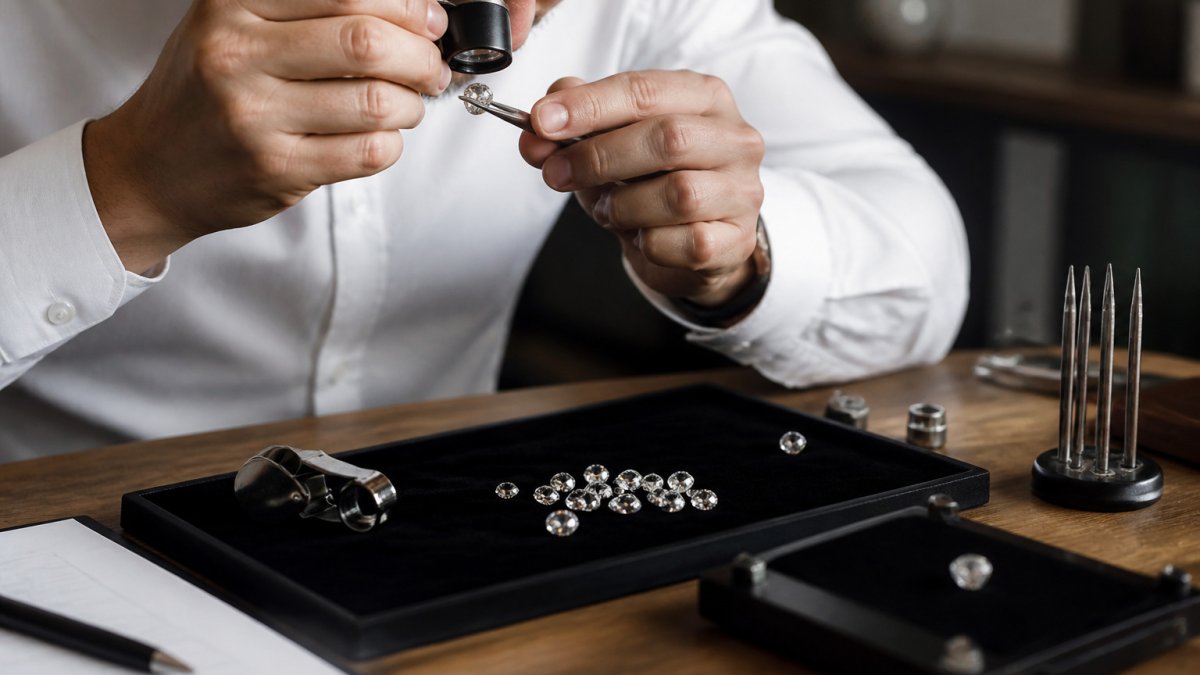
A single marquise or oval stone set east-west adds interest without overwhelming a stack. Smaller round stones in a row read as classic; baguettes and emerald cuts give a more architectural line but have corners that chip more easily, so bezel or channel settings suit them well. Ask to see the actual stone loose and under magnification before it is set.
Sourcing and traceability
Ask where the stones come from and whether the jeweler can document it. For diamonds, the Kimberley Process certification addresses conflict diamonds, and many jewelers now offer stones with provenance documentation (What Is The Kimberley Process?). For colored stones, traceability is less standardized, so ask directly about the mine or supplier and whether the stone is natural, treated, or lab-grown. Lab-grown diamonds are chemically identical to mined stones, but resale value differs, decide which matters more to you before you fall for a stone.
Ask your jeweler how each stone and setting will hold up to daily wear, and get the care and inspection schedule in writing before you commit.
Mixed Metals, Chunky Gold, and Designing Around an Engagement Ring
Mixed metals and chunky gold bands are popular, but the best choice depends on your engagement ring. A warm yellow gold band can make a white-metal engagement ring look brighter by contrast, while a matching metal creates a seamless stack. Bring your engagement ring to your consultation so the band can be measured against its profile and setting height.
Men's Custom Wedding Bands: Width, Finish, and Comfort
Men's custom wedding bands often run wider and heavier than women's. Width changes how the band feels on the hand, so try a few sizes before deciding. A brushed or matte finish hides everyday scratches better than a high polish. Comfort also depends on the inside profile, so ask for a rounded interior if you work with your hands.
The Custom Wedding Band Design Process, Step by Step
Here is the path most custom jewelers follow, with the decision points that matter.
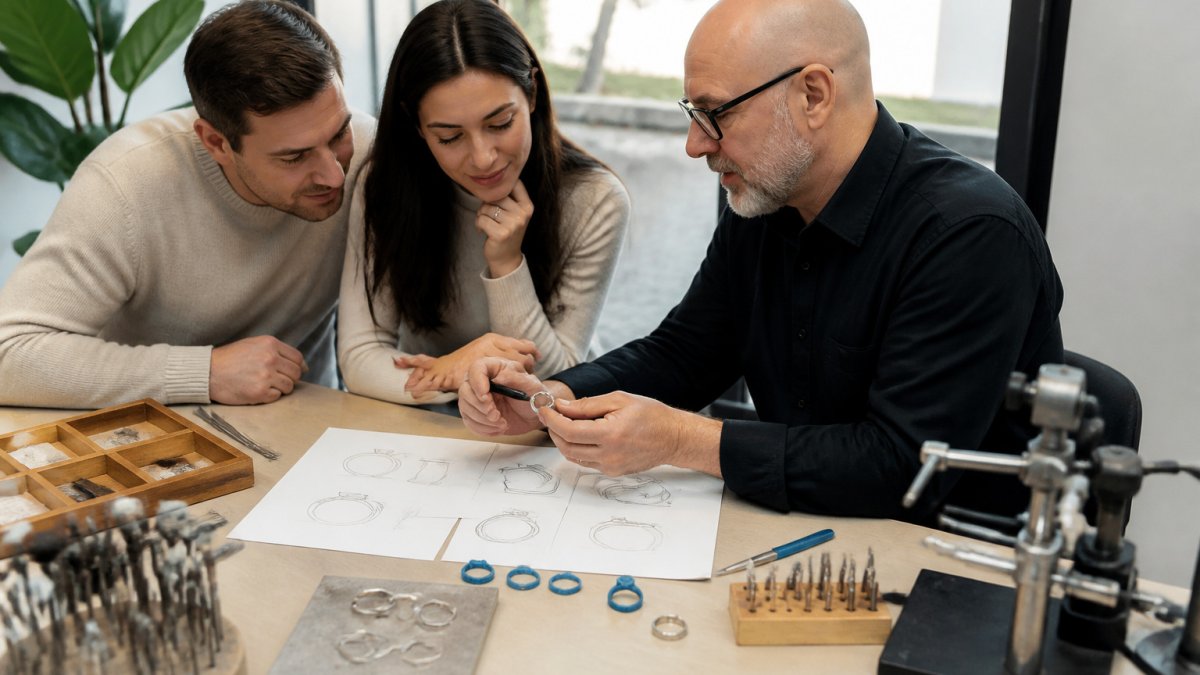
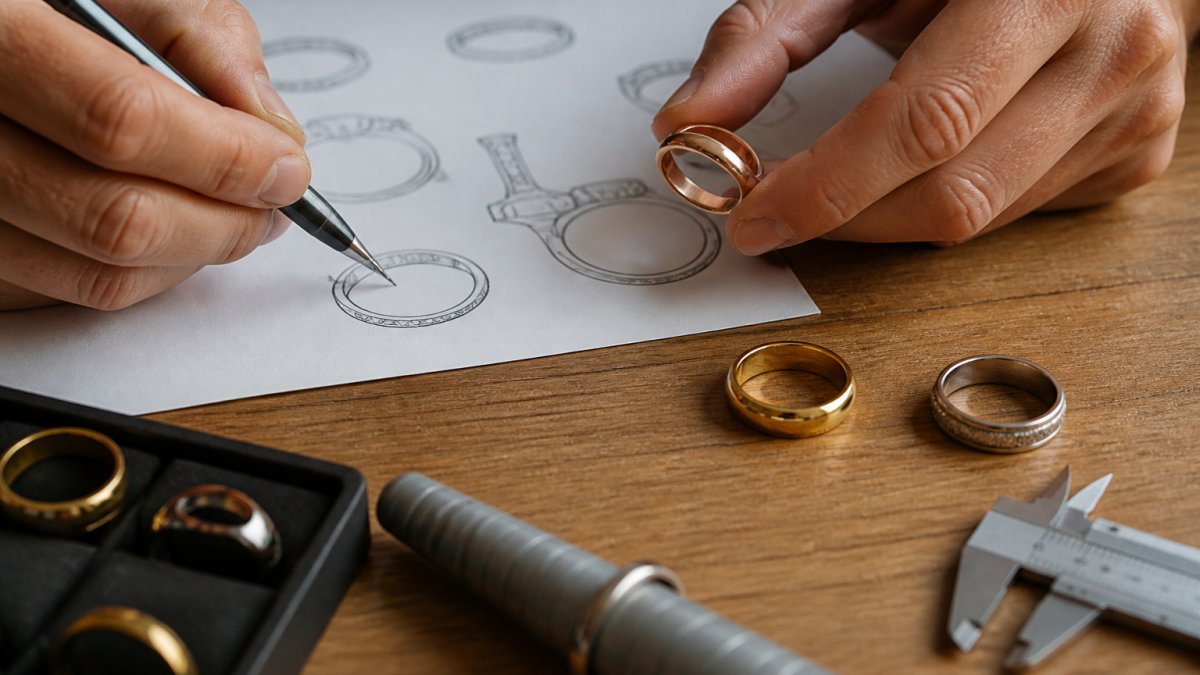
- Inspiration and intake. Bring photos, sketches, screenshots, and a short list of what you dislike. Dislikes are often more useful than likes because they narrow the design space fast. Ask whether the jeweler works from your references or expects to lead the design. See the full custom design process laid out step by step.
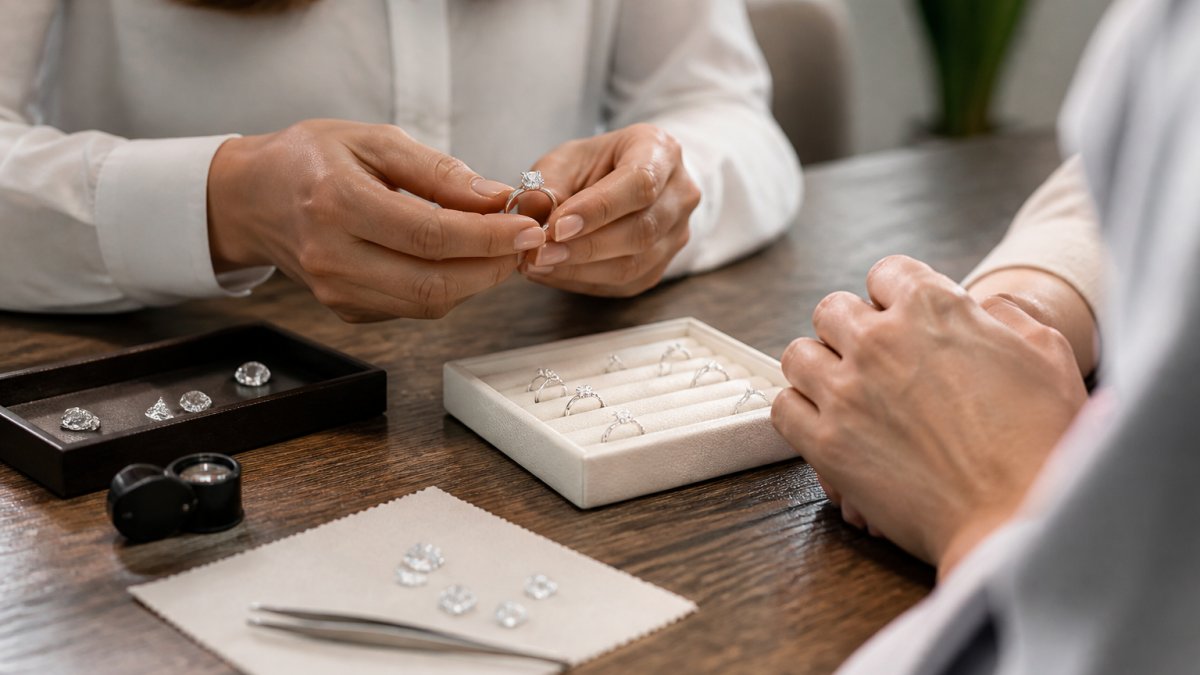
- Consultation and feasibility. Discuss metal, width, stone size, and how the band will sit against your engagement ring. This is where you learn what is physically possible: a 6 mm band will not contour tightly under a low-set halo, and some sculptural shapes cannot be resized later. Ask for the ring's profile and setting height to be measured, not eyeballed.
- Quote and deposit. Request a written quote that itemizes metal, stones, setting labor, and finishing. Confirm in writing whether the quote is fixed or an estimate, and what triggers a change order.
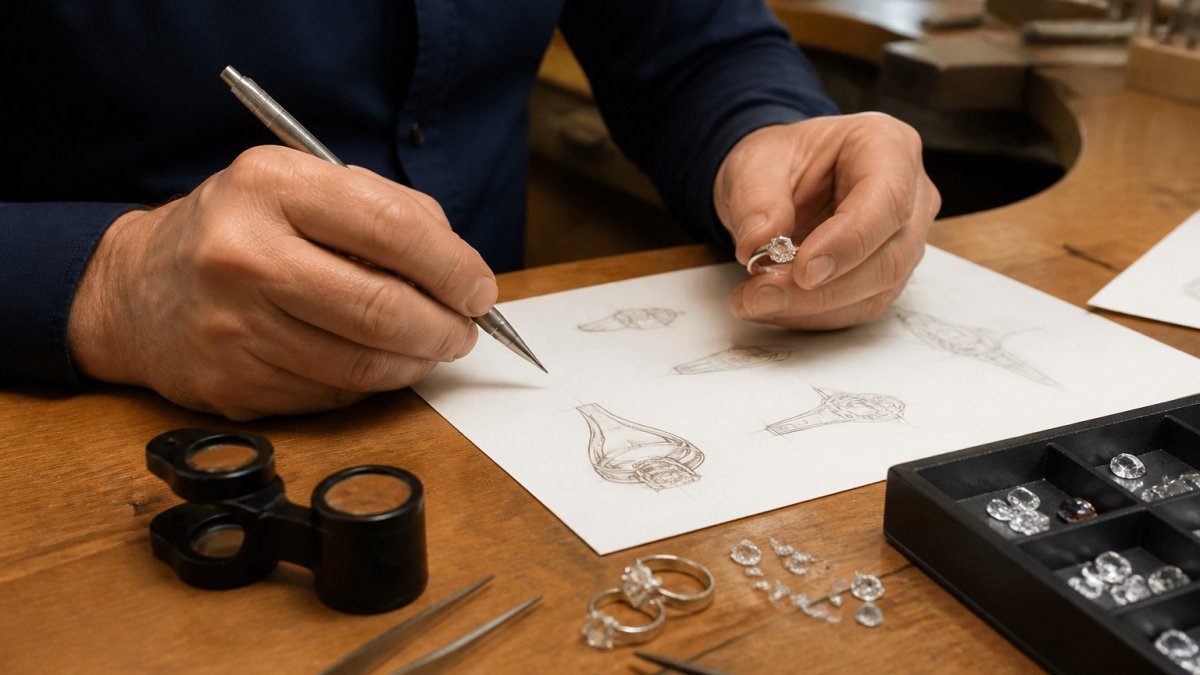
- Design review. You should see a CAD render or a hand-drawn rendering, and often a wax or resin model, before metal is cut. Ask how many revision rounds are included and what additional rounds cost. Approve the final render in writing; that approval usually locks the design.
- Fit check. Confirm ring size and inside profile. If you are choosing a comfort-fit interior, try a sizing set in the same width, because a 4 mm and an 8 mm band feel different at the same size. This is also the moment to test how the band feels when you grip a steering wheel or a dumbbell.
- Production. Casting or fabrication, stone setting, polishing, and engraving. Ask for the estimate in weeks and get the promised date in writing. Simple bands can move faster than sculptural or multi-stone pieces, and hand engraving adds time.
- Final inspection and pickup. Check stone security, finish, engraving spelling, and fit under the jeweler's loupe before you leave.
Ask for each stage and approval in writing so you know exactly what you signed off on. Verify the jeweler's credentials and sourcing before committing; GIA guidance on evaluating diamond and jewelry quality offers a useful starting point for what to ask.
Most custom jewelers follow the same stages, and each one has a decision point you should settle in writing.
| Step | What to do | Key check |
|---|---|---|
| Inspiration and intake | Bring photos, sketches and a list of dislikes | Ask if the jeweler works from your references |
| Consultation and feasibility | Measure the engagement ring's profile and setting height | Confirm what is physically possible |
| Quote and deposit | Request an itemized written quote | Confirm if fixed or an estimate |
| Design review | Review CAD render or wax model | Approve the final render in writing |
| Fit check | Try sizing set in the same width | Test comfort with everyday grip |
| Production | Casting, setting, polishing, engraving | Get the promised date in writing |
| Final inspection and pickup | Check stones, finish and engraving spelling | Compare finished ring to approved render |
Booking Your Custom Wedding Band Consultation
Start by reviewing your ideas, your engagement ring, and your budget. Find a custom ring designer in Orange County and learn how to choose one. Custom pricing depends on metal, stones, and labor, so ask for a written quote rather than a rough estimate. Plan extra time if your wedding is close, since custom pieces can take longer than off-the-shelf rings.
Sherwood Bridge Diamonds offers custom engagement and wedding ring design. Make an Appointment to start planning your custom band.
Frequently Asked Questions
What wedding band styles are trending in 2026?
Mixed-metal pairings, personalized details such as hidden birthstones, engraved coordinates, and symbols, sculptural silhouettes, bezel-set bands, and gemstone accents are all presented as 2026 directions by recent trend roundups. Trend articles generally do not publish adoption rates, so treat these as design directions rather than measured popularity. The most useful approach is to pick the one or two features that reflect your story and build the rest of the band around them. A consultation can show how each style looks alongside your engagement ring.
Are mixed-metal wedding bands in style for 2026?
Mixed-metal wedding bands are listed among 2026 wedding band trends, often as a yellow gold band paired with white gold or platinum accents. Industry coverage describes the look but does not quantify how common it is. Mixed metals work well when a band matches an engagement ring in a different metal or when partners want contrasting tones. Ask your jeweler how the metals will be joined and finished so the transition looks deliberate and holds up to daily wear.
How long does it take to make a custom wedding band?
Timelines depend on the design's complexity, the metal and any stones, and the jeweler's current workload, so exact durations vary by studio. A straightforward band can move faster than a piece with bezel settings, engraving, or a custom profile. If your wedding is close, mention the date at the start so the design phase can be planned around it.
How much does a custom wedding band cost?
Pricing depends on the metal, stone choices, band width, design complexity, and finishing work, so there is no single standard figure to quote. Sherwood Bridge Diamonds has not published a price list in this article. For current pricing or a quote tailored to your design, contact Sherwood Bridge Diamonds directly or request an appointment through the website. Ask for an itemized estimate so you can see which choices most affect the total.